
Retail of the future

Retail of the future
Download the PDF
Contents
Who’s afraid of the next retail disruption?
In the past few months, retailers have gone through furious, and exceptionally fast, transformation. We have seen wellestablished names in the industry crumble and fall, while more agile players moved swiftly into their space. We have seen light-speed change in consumer behavior, and in the way businesses present, sell, and deliver products. We have heard that loyalty is dead, and that loyalty is retail’s new currency.
We are worn and exhilarated and exhausted and hopeful, and although it might feel like we have been through everything by now, it’s not time to get comfortable just yet.
Here are five emerging trends and technologies that we expect will offer new challenges and opportunities in the months ahead.
Online shopping
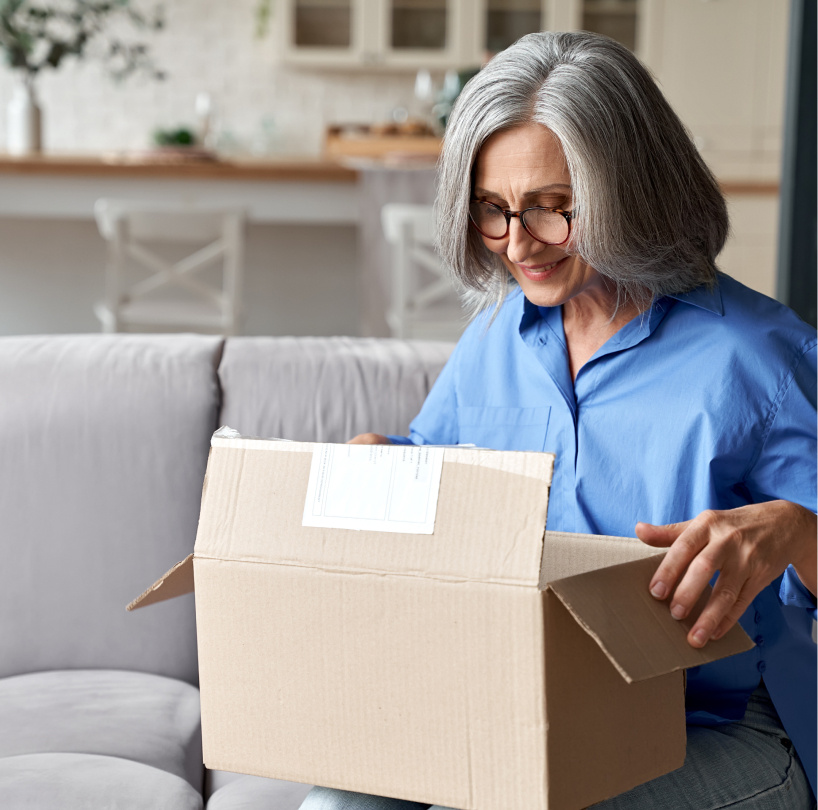
A functional eCommerce platform is now a necessity. According to Census statistics, during the pandemic sales on eCommerce grew almost 45% over the previous year – at the same time, overall retail sales decreased.
Although eCommerce had been slowly gaining ground for years, the sudden surge in demand caught many retailers unprepared. The most common challenges include:
- Lack of a functional e-commerce. Some retailers had been postponing investing in eCommerce, with a few downright refusing to go online. As the pandemic hit, these late comers had to build an eCommerce platform overnight (with mixed results), or use thirdparty marketplaces like Amazon and eBay to stay top of mind with consumers and manage to sell at least some products. Others, including some well-known brands, were too late to the party, and shut doors.
- Online/offline disconnect. Many retailers lack a unified commerce approach, managing instead their eCommerce and stores with separate, somehow-connected software solutions. This often results in lack of clarity: they can’t see inventory in real time (and move products to where they need to be), they can’t prevent the risk of overstock and out-of-stocks, and they can’t keep track of the customer journey and preferences across channels.
- Delivery issues. When Amazon stops offering one-day deliveries because of shipping problems, you know the situation is serious. Broken transportation networks, overwhelmed shipping services and difficulties in offering contactless deliveries are just some of the hurdles retailers need to overcome.
- Scaling challenges. As demand grows and dwindles in seemingly unpredictable ways, retailers need to be able to scale their eCommerce systems, supply chain and store operations so they can handle sudden increases in traffic. At the same time, they also need to attract enough business to keep sales going during slow times.
- Insufficient infrastructure. Lack of warehouse space and delays and breaks in supply chains are common issues that lead to unfulfilled orders. To solve the first problem, some retailers have switched to “dark stores,” converting traditional retail spaces into warehouses. The second challenge is harder to overcome, as it requires adding flexibility and agility in the supply chain, identifying alternative providers and decreasing dependence on specific sources.
- Online safety concerns. As online shopping grows, so do cyberattacks. Unfortunately, not all retailers are prepared. According to a recent survey by payment provider Riskified, more than a quarter of merchants (27%) do not have measures in place to prevent Account Takeover (ATO) attacks on their eCommerce. A similar number (24%) said they can’t identify an ATO during a purchase.
Home delivery, click and collect and curbside pickup
The contactless modes of ordering and picking up items which boomed during the pandemic will not disappear anytime soon.
Home delivery used to be all about speed and traceability; now, it also needs to be safe and contactless. Home delivery is not easy to accomplish, with retailers having to consider:
- Higher costs and reduced visibility when relying on third-party delivery services.
- Need to dispatch and route items within short and predictable timeframes.
- Need to track drivers as well as items, on both the customer’s and the retailer’s side.
- Need for digital proof of delivery to ensure the item does reach the customer.
Click and collect (also known as BOPIS, for “buy online, pick up in store”), popular for years, achieved much higher penetration during the pandemic. Today, most consumers see it as a necessary option. For retailers, the service has several plus sides:
- It’s quicker to set up and requires fewer resources than home delivery.
- Unlike home delivery, there are no additional costs for the customer.
- It lets customers pick up the order when convenient.
- It drives people back into the store.
- It leads to larger baskets: according to
- Forrester research, 35% of shoppers who pick up an online order in-store (versus curbside, see below) will buy something else as well.
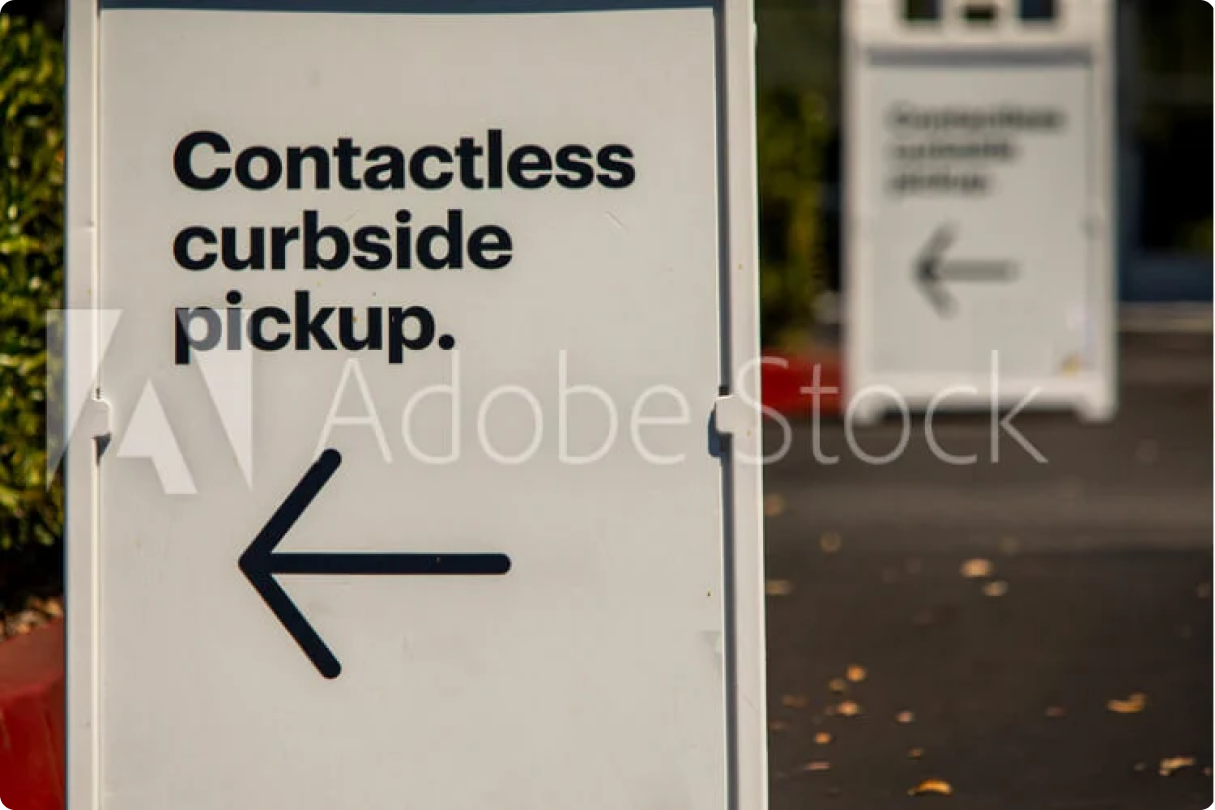
Curbside pickup refers to buying an item online and picking it up outside the store, often without getting out of the car. In the case of contactless curbside pickup, employees might put the purchases straight into the car trunk. Curbside pickup, already a growing trend, exploded during the pandemic. Take US giant Target, which began testing its Drive Up service in 2017. In 2020, sales increased 1,000% over the previous year. For retailers, especially those with a parking lot, this is a safe way to serve customers while keeping the distance. On the minus side, when customers don’t enter your doors, upselling can be harder.
In the next months, we expect to see different formats of curbside pickup, including
- Malls organizing combined pick-up services for several stores within their premises.
- Multi-retailer curbside areas.
- Curbside returns without getting out of the car.
Virtual events
When meet-ups moved online, retailers were faced with the challenge of delivering engaging and exciting virtual events. How can you avoid the dreary “Zoom conference call” feel? Here are four ideas:
- Give tangible takeaways. A Marc Jacobs launch party featured simultaneous rooms with interactive activities, including talks, concerts, one-to-one tips from a photographer, and live portraits drawn by an illustrator. Users could then receive personalized artwork and share it online – making the event highly personalized and interactive.
- Use influencers. Luxury fashion brand Burberry live-streamed influencer Yvonne Ching as she browsed the brand’s Shanghai flagship store. The event was watched by almost 1.4m viewers.
- Concentrate on the specific needs of your audience. Knowing its audience’s needs, outdoor brand Mammut has begun streaming extremely popular online training sessions with skill-building tips and safety lessons for outdoor enthusiasts.
- Make it immersive. Singer Rihanna’s highly popular make-up brand Fenty Skin hosted a Virtual Reality-powered launch party. Attendees could enter different rooms, including a bar area with personalized cocktail recipes, a spa with links to products and a main room with livestreams from Rihanna and other celebrities. The event was so popular that #FentySkinLaunch Party became a trending hashtag on Twitter.


Untraditional checkouts
Long lines at the register have gone from a nuisance to a potential health hazard. Traditional registers where people have to queue to pay may become less common, to be replaced by
- Mobile POS. By running the Point of Sale (POS) on mobile devices like tablet computers or smartphones, retailers can reduce needless crowding around the register. Employees can use the mobile POS to look up information, scan items, close transactions, accept payments and print receipts anywhere the customers are. This technology is also ideal for stores with large premises, or for retailers moving their business outdoors. Another advantage of mobile POS is that more devices can be added as needed at limited cost.
- Scan-and-go technologies. The latest advances in Point of Sale technology see the POS move into the consumers’ hands. Shoppers can download a “scan and go” app on their phone and then self-serve in the shop, using their personal device (or a specific handset provided by the retailer) to scan the items as they are added to the cart. Scan and Go technology has become quite popular in grocery stores; we expect to see more of it in other retail sectors. Scan and go apps can also reduce the need for signage in store. By scanning a barcode, customers can see all of the product’s details – composition, usage, care instructions, nutrition and ingredients in the case of a food item – without having to touch the product.
- Cashierless stores. The Amazon Go model, with no tills or cashiers, appeared extreme when it was launched. Today, more retailers are using technology (the most common is a mix of ceiling-mounted cameras, RFID tags and shelf sensors) that allows customers to shop and leave without needing to waste time to scan and pay items. We’ll certainly see more variations of this concept in the months to come.
- Self-checkouts. Self-checkout machines help limit contact between customers and employees. These registers also require less space than traditional manned checkouts, enabling retailers to multiply their checkout points without wasting real estate.
Contactless payments
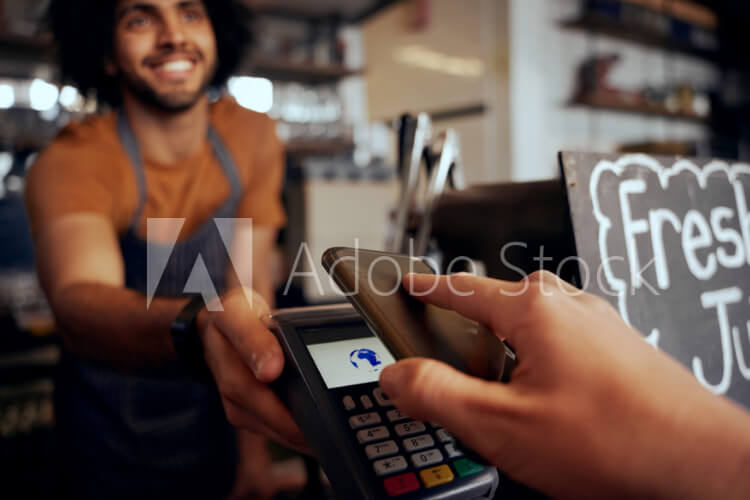
Adoption of low-touch and no-touch forms of payments, such as mobile wallets and contactless cards, accelerated swiftly during the pandemic. In China, e-wallet purchases even surpassed cash purchases by 23%.
Despite the popularity of these options among consumers, the higher transaction costs associated with contactless payments have slowed down adoption among retailers. “Curbside pickup and ‘buy online, pick up in-store’ transactions are treated as ‘card not present’ online transactions by the processors, so retailers are paying an online rate even when these purchases are picked up at the store,” explains Lily Varon, senior analyst at research firm Forrester. “Retailers feel these are really in-store transactions so there’s some pain there.”
While economic considerations may hold back some retailers, we believe that the benefits that contactless payments offer – on top of supporting social distancing, they are quick, convenient, and eliminate queues – will make this a common payment method in the future.
Voice shopping
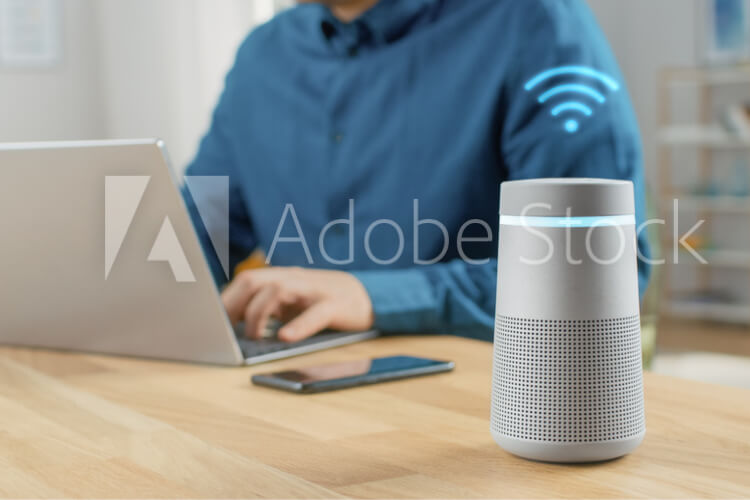
Voice-based online searches are becoming mainstream, and purchases by voice may be next. Although adoption of voice commerce has been slower than expected, shoppers (especially younger generations) are increasingly using voice assistants to shop for items. Three main factors are contributing to the uptick in usage.
- Convenience. Voice shopping is fast, natural, and doesn’t require consumers to learn how to use a device.
- Popularity of smart speakers. AI-powered, voice-controlled smart speakers have gone through explosive growth in the past few years. In the U.S., over one in three consumers owns one. The global market is forecast to reach 640 million units by 2024 according to a report from technology analyst firm Canalys.
- Advances in AI. Advances in Artificial Intelligence (AI) and natural language processing are making smart voice assistants increasingly better at interpreting human voice commands and understanding intent.
For retailers, voice shopping means drastic changes are required in the structure of their eCommerce sites. When speaking, people tend to skip some information, and to ask follow-up questions. Retailers must consider new ways of navigating their catalog, moving from keywords to context.
Section 3
Section 4
Section 5


About LS Retail
LS Retail is a world-leading provider of business management software solutions for retail, hospitality, food service and forecourt businesses of all sizes. Our unified commerce management systems power thousands of fashion boutiques, electronics stores, furniture giants, duty free chains, restaurants, hotels, coffee shops, gas stations, convenience stores and more.

Change happens suddenly. Don’t let it catch you off guard.
The world can change in a flash. If you want to be here tomorrow, you must make sure you have reliable, resilient and flexible tech today. What you need is software that enables you to pivot quickly to new ways of delivering products and experiences. And you need it before the wave of change sweeps you away.
